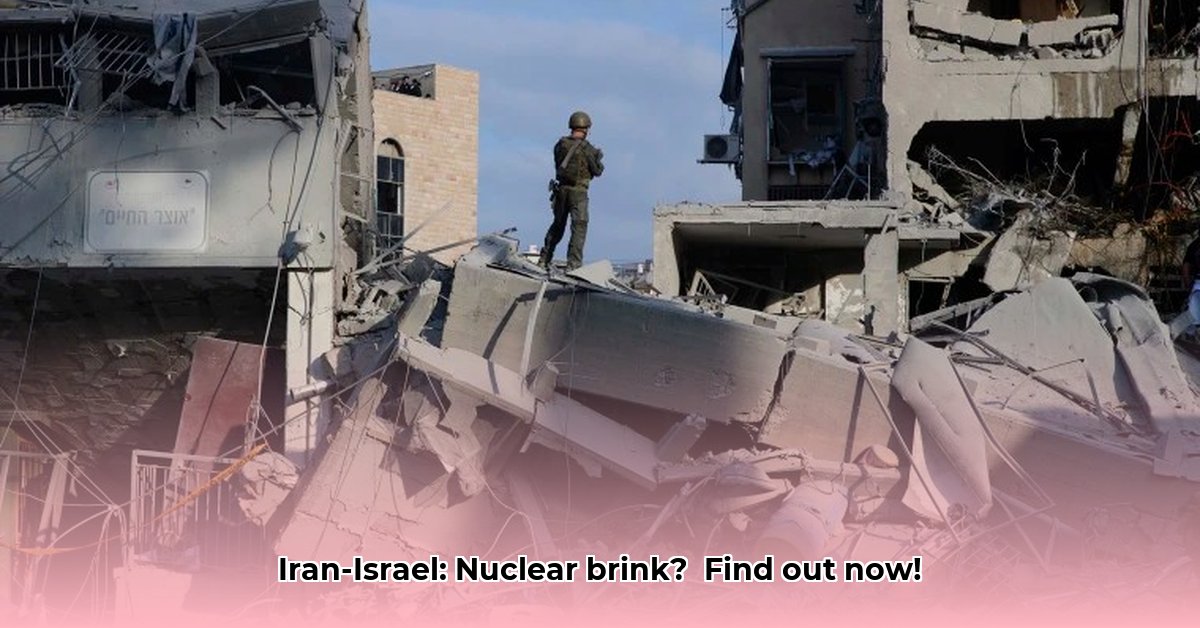
A Powder Keg in the Middle East: Understanding the Iran-Israel Standoff
The escalating tensions between Iran and Israel represent a significant threat to regional and global stability. This isn't merely a bilateral conflict; it's a complex web of geopolitical rivalries, historical grievances, and the ever-present danger of nuclear escalation. The current situation is precarious, with the potential for a wider conflict looming large. Understanding the intricacies of this volatile situation requires examining the key players, their motivations, and the potential consequences of inaction.
Recent events, particularly Israeli actions targeting Iranian interests, have significantly heightened the risk of escalation. The situation demands a nuanced understanding of the complex interplay of actors and interests. We need to carefully parse the actions of the key players to understand the path to peace.
The Nuclear Question: A Looming Threat
Iran's nuclear enrichment programme remains the central point of contention. While Iran has offered hints at potential compromises, assertions about “red lines” coupled with their continued enrichment activities, cast doubt on their sincerity. Professor David Albright, a renowned scholar of nuclear proliferation at the Institute for Science and International Security, notes, “Iran's statements regarding its nuclear programme should be viewed with caution, given their history of obfuscation and lack of transparency.” This lack of clarity fuels concerns about their intentions and poses a considerable challenge to international efforts at de-escalation.
Is there genuine room for compromise, or are these tactical maneuvers to gain leverage in ongoing negotiations? This question hangs heavy over the current situation. The IAEA’s continued monitoring and reporting is critical to maintaining transparency and accountability in this tense environment.
Beyond the Bilateral: A Regional Standoff
The conflict isn't isolated to Iran and Israel. Regional rivalries and proxy wars further complicate the landscape. The legacy of the failed 2015 Iranian nuclear deal, the ongoing role of external actors, and the complex relationships between various regional powers contribute to this dangerous dynamic. This situation, says Dr. Sarah Phillips, Professor of International Relations at the University of Pretoria, “demonstrates why multilateral diplomacy is crucial in addressing regional conflicts. Bilateral solutions often fail to take into account regional nuances which exacerbate existing tensions.” The lack of direct US involvement in current negotiations, despite their significant influence, adds yet another layer of intricacy.
How will the absence of direct US engagement impact the prospects of peace? Will the US increase its involvement? This is a key question that will determine if conflict can be avoided.
Stakeholder Analysis: Who's Playing What Hand?
The following table summarizes the main players and their objectives:
| Stakeholder | Current Actions | Long-Term Goals |
|---|---|---|
| Iran | Continuing nuclear enrichment, suggesting limited concessions | Maintaining regional influence, easing international pressure |
| Israel | Military actions aimed at disrupting Iranian capabilities | Preventing Iran from acquiring nuclear weapons |
| EU & E3 | Mediating, offering incentives and sanctions | Regional stability, preventing nuclear escalation |
| United States | Indirect engagement, providing support to allies | Maintaining regional stability, containing Iranian influence |
| United Nations | Promoting dialogue and a peaceful resolution | Prevention of nuclear proliferation, humanitarian aid |
| Civilians (Iran & Israel) | Experiencing hardship and insecurity | Peace, security, and economic stability |
Assessing the Risks: A Cascade of Consequences
Several scenarios pose significant risks, each with potentially catastrophic consequences:
| Potential Scenario | Likelihood | Potential Consequences | Preventative Measures |
|---|---|---|---|
| Direct military conflict | Moderate | Widespread war, mass casualties | Intensive diplomacy, robust intelligence gathering |
| Failure of diplomatic efforts | High | Increased tensions, further escalation | Focused dialogue, compromise from all sides |
| Attack on nuclear installations | Low | Nuclear disaster, regional and global devastation | Prevention through diplomatic channels, strict monitoring |
Legal and Regulatory Implications: Navigating International Law
The legality of Iran's nuclear activities and any potential military response by Israel remains a critical factor. International law presents significant challenges and boundaries. The IAEA’s role in monitoring and reporting cannot be overstated. Its findings will play a central role in shaping the international community's response and the potential for further international sanctions. The lack of comprehensive legal frameworks for this specific situation adds another layer of complexities to an already volatile context.
The situation is dire. The potential for a catastrophic outcome is very real. The international community must act decisively to de-escalate the situation and pursue a lasting peaceful resolution. The future of the Middle East, and potentially global stability, hangs in the balance.